Introduction
If any single country can lay claim to being the definitive African travel destination, it is Tanzania. Here, on a vast canvas of 945,000 square kilometres straddling the eastern edge of the continent, nearly every element that draws travellers to Africa exists in extraordinary abundance and variety. The highest mountain in Africa rises from equatorial plains. The world’s greatest wildlife migration plays out across an ecosystem the size of a small country. An ancient spice island floats in a turquoise sea. The deepest lake in Africa reflects a sky so blue it seems painted. And in the remote south, wilderness areas larger than entire European nations receive barely a handful of visitors each year.
Tanzania is where the word safari from the Swahili for “journey” was first given its modern meaning by the Arab traders and European explorers who moved through this land centuries ago. It remains, today, the most complete safari destination on earth.
Tourism: The Full Spectrum of Africa
The Serengeti — The Greatest Wildlife Theatre
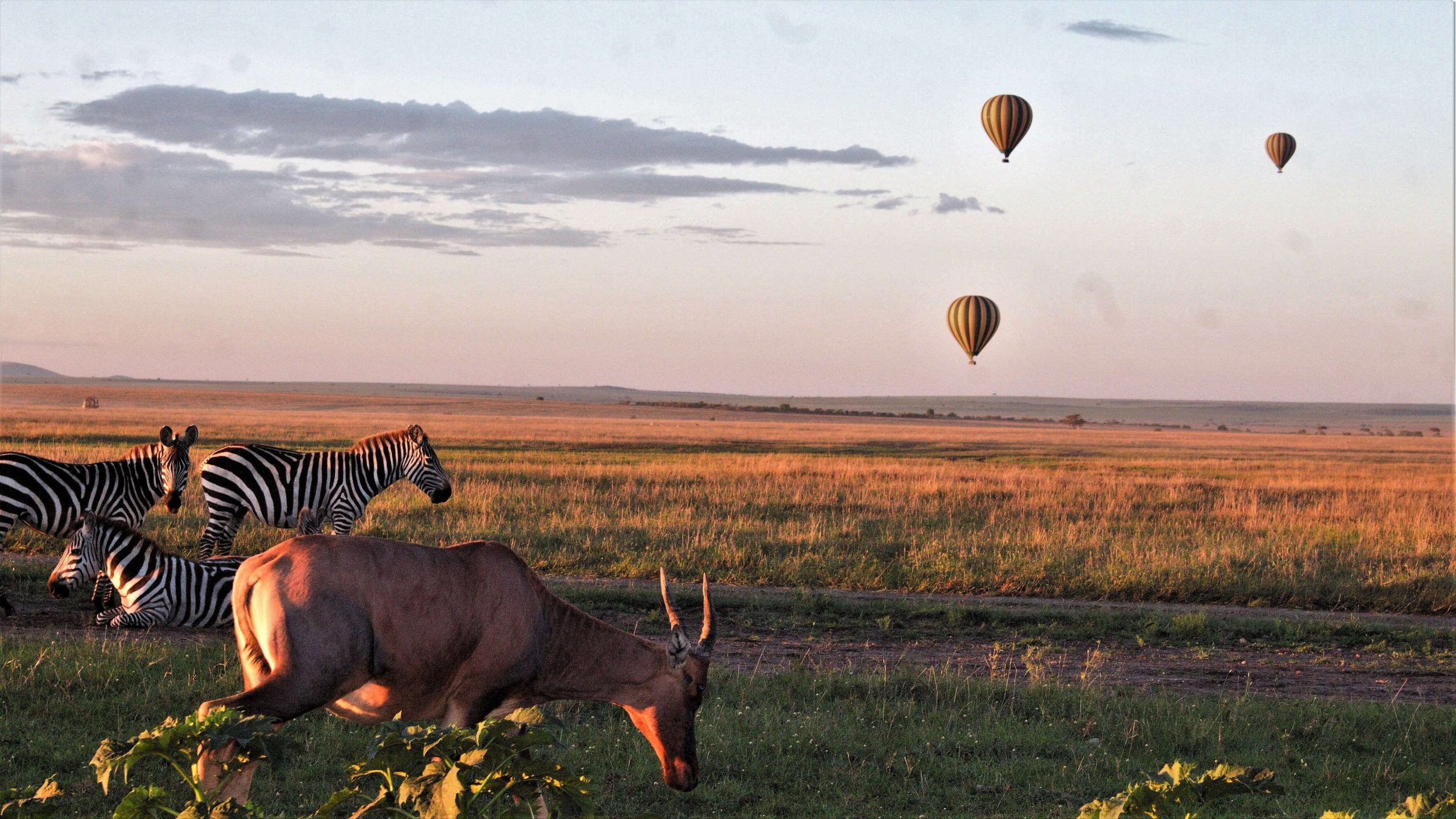
The Serengeti National Park is, by most measures, the most celebrated wildlife area in the world. Covering 14,763 square kilometres of open savannah, woodland, and kopje-studded plains in northern Tanzania, it forms the heart of a broader ecosystem that spills across the Kenyan border into the Maasai Mara and together this single ecological unit supports the most spectacular concentration of large mammals anywhere on the planet.
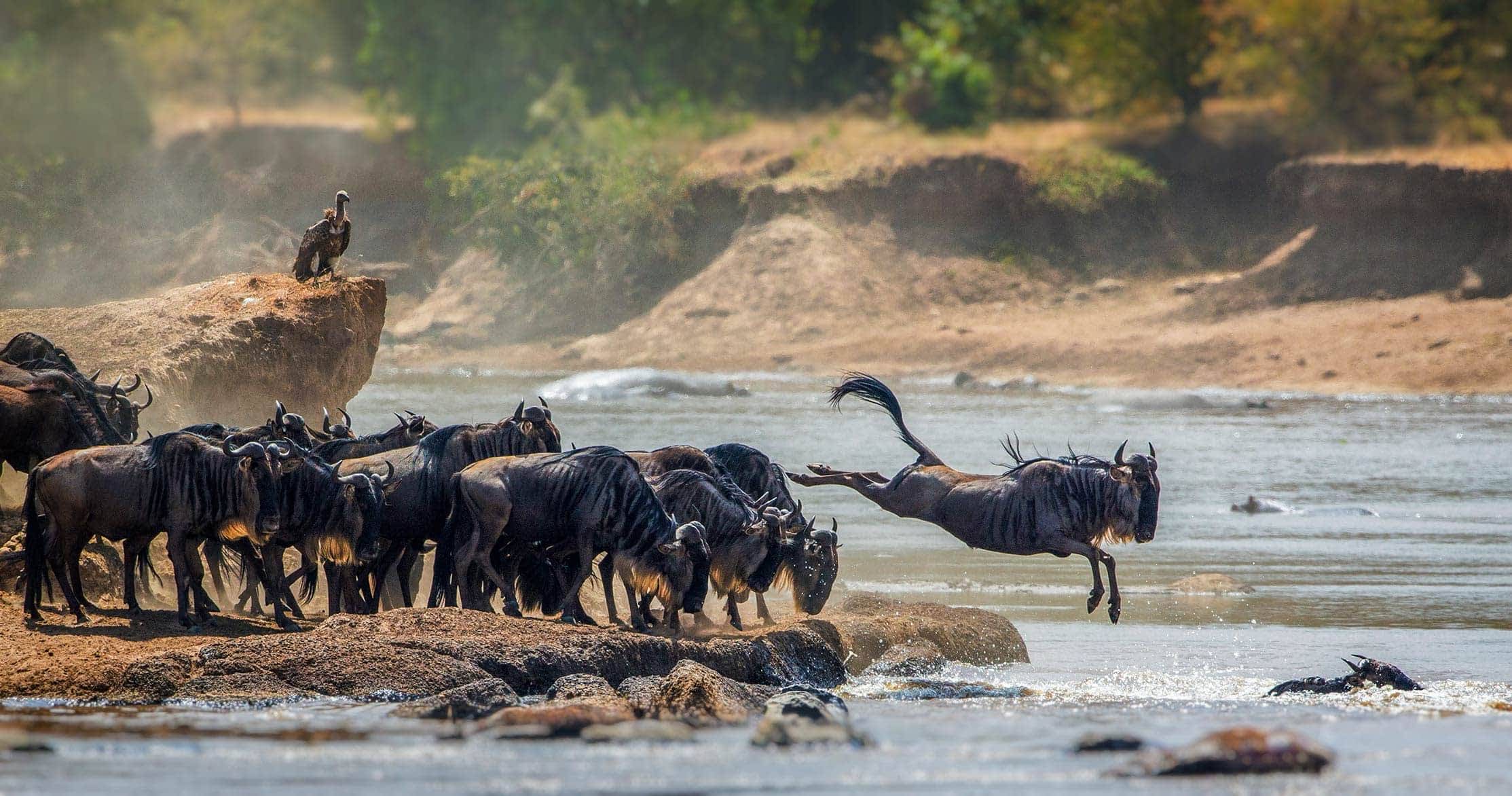
The park is famous above all for the Great Migration the perpetual circular movement of over 1.5 million wildebeest, 400,000 zebra, and hundreds of thousands of gazelle across the ecosystem in pursuit of fresh grass, driven by rainfall patterns and governed by instinct unchanged over millennia. Unlike in Kenya’s Mara, where the migration passes through seasonally, the Serengeti holds the herds for most of the year. The calving season in the southern Serengeti from January to March, when up to half a million wildebeest calves are born in a matter of weeks, is one of nature’s most overwhelming spectacles and one of its most brutal, as predators converge in extraordinary numbers.
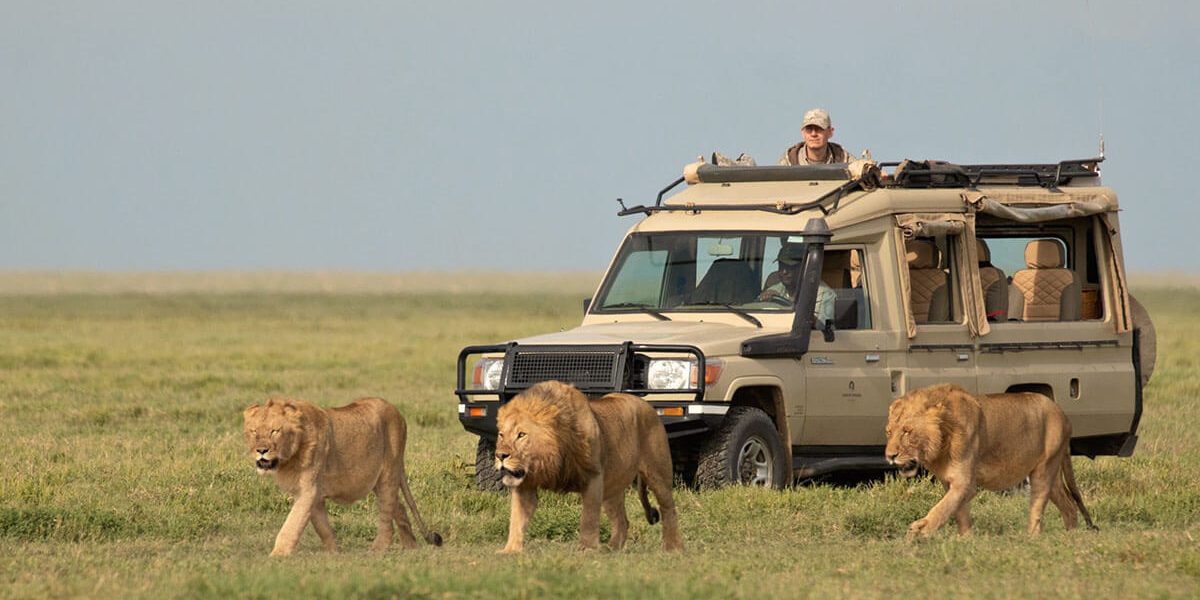
But the Serengeti is world-class in any season. Its resident lion prides are among the largest and most studied in Africa. Leopards drape themselves across acacia branches in the Seronera Valley. Cheetahs hunt across the open plains with balletic precision. Wild dogs, a rare sight across much of Africa, roam the Lamai Wedge in the north. And the night skies above the Serengeti far from any city light display the Milky Way in its full, undimmed glory.
Ngorongoro Crater — The Eden of Africa
Twenty kilometres wide and 600 metres deep, the Ngorongoro Crater is the world’s largest intact volcanic caldera, and one of the most extraordinary wildlife arenas on earth. Formed when a massive volcano collapsed inward several million years ago, the crater floor forms a self-contained ecosystem of some 260 square kilometres where approximately 25,000 large animals live year-round a density of wildlife that astonishes even the most seasoned safari travellers.
Lions, elephants, buffaloes, zebras, wildebeest, hippos, hyenas, serval cats, and golden jackals all inhabit the crater floor. Most significantly, Ngorongoro is one of the last places in East Africa where the critically endangered black rhino can be reliably seen a small population roams the Lerai Forest and the open grassland, and a sighting, always at respectful distance, is among the most emotionally charged wildlife experiences available.
The rim of the crater, at 2,300 metres, is draped in Afromontane forest and offers views down into the crater that reduce visitors to silence. The Ngorongoro Conservation Area surrounding the park is also the heartland of the Maasai people in Tanzania, and their red-robed herders with their cattle are a constant and iconic presence in the landscape.
Mount Kilimanjaro — The Roof of Africa
Tanzania’s most famous landmark needs no introduction and yet no amount of prior knowledge quite prepares a visitor for the reality of Kilimanjaro. At 5,895 metres above sea level, the mountain is the highest point in Africa, a massive free-standing volcanic massif rising improbably from the surrounding plains, its summit glaciers gleaming white against a sky that is almost impossibly blue.
Kilimanjaro is one of the Seven Summits the highest points on each continent and is the only one that can be reached by a non-technical walker, requiring fitness and acclimatisation but no mountaineering skills. Seven established routes lead to the summit, ranging from the popular Marangu (“Coca-Cola”) route to the more scenic Machame and the remote Lemosho route, each passing through a series of dramatically distinct ecological zones — equatorial rainforest, heath and moorland, alpine desert, and finally the arctic zone near the summit crater.
Reaching Uhuru Peak at dawn, with the plains of Tanzania spreading in every direction thousands of metres below and the curve of the earth visible on the horizon, is an experience that marks a person permanently. Approximately 50,000 people attempt the climb each year; roughly two-thirds reach the summit.
Zanzibar — The Spice Island of the Indian Ocean
Forty kilometres off the Tanzanian coast, the island of Zanzibar is one of the most evocative destinations in Africa — a place where the scent of cloves and cinnamon mingles with sea salt, where the call to prayer echoes across coral-stone alleyways at dusk, and where the Indian Ocean glitters in shades of turquoise and emerald that seem to belong to a different world.
Stone Town, Zanzibar’s ancient capital and a UNESCO World Heritage Site, is a labyrinth of narrow streets lined with centuries-old merchant houses whose ornately carved wooden doors studded with brass, inlaid with geometric patterns are among the finest examples of Swahili-Arab architecture anywhere. The town’s history as a major centre of the Indian Ocean spice and slave trade has left an architectural and cultural legacy of extraordinary richness. The former slave market, now the site of an Anglican cathedral, is a sombre and important place.
Beyond Stone Town, Zanzibar offers some of the finest beaches in the world. The north coast around Nungwi and Kendwa has calm, clear water and a lively beach scene. The east coast at Paje and Bwejuu offers long ribbons of white sand backed by casuarina trees, and the shallow offshore waters make it one of the world’s top kitesurfing destinations. The southeast, around Jambiani, is quieter and more rural, its villages of fishermen and seaweed farmers preserving a way of life little changed for generations.
Zanzibar’s interior often overlooked by beach-focused visitors rewards exploration. The Jozani Chakwa Bay National Park protects the last significant stand of indigenous forest on the island and is home to the rare Zanzibar red colobus monkey, found nowhere else on earth. Spice farm tours trace the island’s plantation heritage through nutmeg, vanilla, lemongrass, black pepper, and of course cloves, of which Zanzibar remains one of the world’s largest producers.
The Southern Parks — Tanzania’s Undiscovered Wilderness
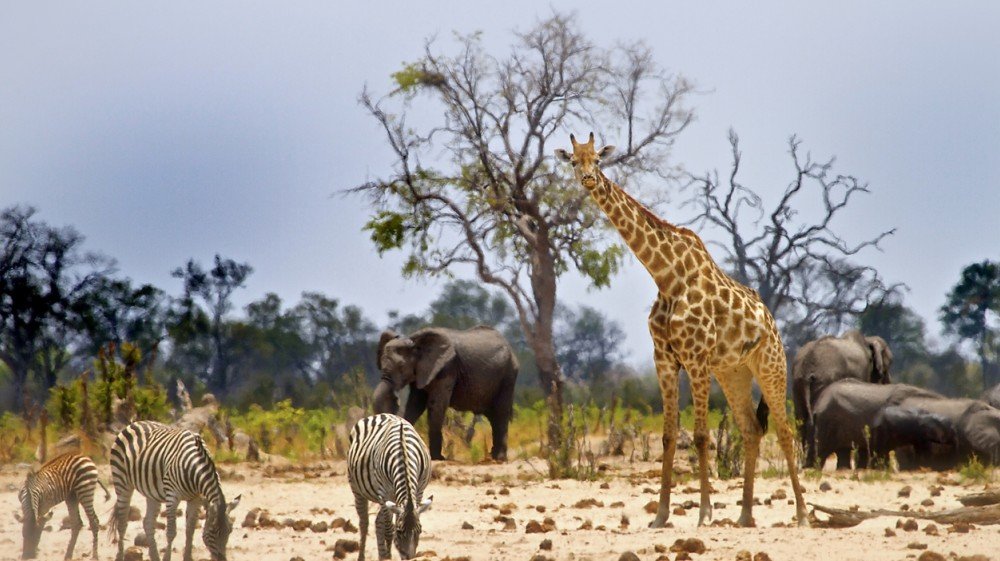
While the northern circuit of Serengeti, Ngorongoro, and Kilimanjaro draws the majority of Tanzania’s visitors, the country’s vast south holds wilderness areas of equal magnificence and a fraction of the crowds.
The Selous Game Reserve now formally known as the Nyerere National Park in honour of Tanzania’s founding father is at nearly 50,000 square kilometres one of the largest protected areas in Africa and a UNESCO World Heritage Site. Its landscape of miombo woodland, open flood plains, and the wide, palm-lined Rufiji River supports enormous populations of elephant, hippo, crocodile, buffalo, lion, leopard, and wild dog. Boat safaris on the Rufiji drifting past hippo pods and crocodiles the length of a car, with fish eagles calling overhead are among the most peaceful and magnificent wildlife experiences in Africa.
Ruaha National Park, further inland, is Tanzania’s largest national park and arguably its finest yet remains largely unknown outside dedicated safari circles. Its dry, dramatic landscape of baobab trees, rocky outcrops, and the seasonal Ruaha River supports exceptional lion and leopard populations, large elephant herds, greater and lesser kudu, and over 570 species of bird. The absence of mass tourism means game drives here have a quality of exclusivity and rawness that is increasingly hard to find elsewhere.
Lake Tanganyika and the Western Parks
Tanzania’s western border is defined by Lake Tanganyika, the world’s second-deepest lake and one of its oldest an ancient, extraordinary body of water whose isolation over millions of years has produced hundreds of fish species found nowhere else. The town of Kigoma on its shores is the gateway to Mahale Mountains National Park, where habituated chimpanzee communities have been studied since the 1960s. Reaching Mahale requires a flight or an overnight boat journey a journey that itself becomes part of the experience and the reward is a chimp-trekking encounter of extraordinary intimacy in a forest that descends directly to the lakeshore.
Gombe National Park, further north near Kigoma, is where Jane Goodall began her landmark research into chimpanzee behaviour in 1960 research that transformed scientific understanding of primates and humans alike. Trekking to find the chimpanzees here is a pilgrimage for anyone with an interest in the natural world.
Dar es Salaam — The City by the Sea
Tanzania’s largest city and commercial capital, Dar es Salaam, sits on a deep natural harbour on the Indian Ocean coast. Though the political capital has moved to Dodoma in the interior, Dar remains the country’s beating commercial and cultural heart. The city’s markets particularly the Kariakoo are magnificent chaos, piled high with spices, fabrics, vegetables, and hardware in a sensory overload that is entirely and exhilaratingly African.
The National Museum and Village Museum together offer an excellent introduction to Tanzania’s cultural and archaeological heritage, including casts of the Laetoli footprints the 3.6-million-year-old fossilised tracks of early hominids discovered in northern Tanzania that represent some of the oldest direct evidence of upright human walking. The city’s restaurant scene, particularly around the Msasani Peninsula, has grown considerably in quality and variety, and the waterfront at Coco Beach is a popular gathering spot for locals at weekends.
The Northern Circuit vs. the Southern Circuit
Tanzania’s tourism broadly divides into two major itinerary types. The northern circuit Kilimanjaro, Arusha, Tarangire, Lake Manyara, Ngorongoro, and the Serengeti is the classic and most visited route, easily combined into a two-week itinerary of exceptional density. The southern circuit Ruaha, Selous/Nyerere, and Zanzibar as a beach finale offers comparable wildlife quality with far fewer visitors and a genuine sense of discovery.
Many experienced Africa travellers argue that the southern parks represent the continent at its most authentic and unhurried. Both circuits, however, are world-class, and the ideal Tanzania itinerary combines elements of both, finishing on the beaches of Zanzibar.
Practical Information
Tanzania is a year-round destination. The long dry season from June to October is the classic safari season in the north, while the short dry season from January to February is ideal for the Serengeti calving. Kilimanjaro is climbed year-round, though the summit is clearest in the dry months. Julius Nyerere International Airport in Dar es Salaam and Kilimanjaro International Airport near Arusha are the main international gateways, with good connections to Europe, the Middle East, and across Africa. Tanzania uses the Tanzanian Shilling, Swahili and English are both official languages, and a standard tourist visa is available on arrival or via the e-visa portal.
A Country Without Equal
Tanzania occupies a unique position in world travel — a country large enough and varied enough to absorb a lifetime of return visits, yet coherent enough in character that every corner feels unmistakably itself. To walk the rim of Ngorongoro at dawn, to stand on the summit of Kilimanjaro as the sun rises over the curve of the earth, to watch a million wildebeest move across the Serengeti, to wander the spice-scented lanes of Stone Town at dusk — these are experiences that belong to no other place. Tanzania is Africa in its most complete and most extraordinary form.
Ready to Experience Tanzania?
From the Serengeti to Zanzibar, let Tarec Gorilla Safaris craft your perfect Tanzanian journey. Your unforgettable African adventure starts here.