The Primate Capital Of The World
"In Kibale, the forest speaks. Every rustle in the canopy, every call in the distance, is another of the twelve primate species that make this the most extraordinary concentration of primates on the African continent."
Introduction
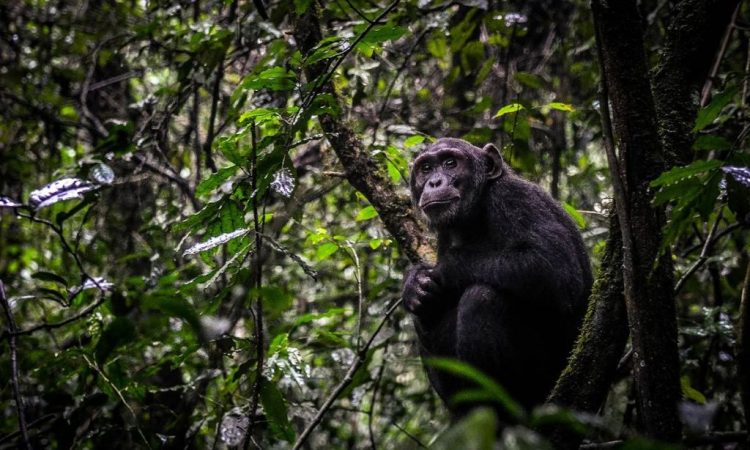
There are forests in Africa, and then there is Kibale. A 795-square-kilometre expanse of moist tropical forest in western Uganda, at altitudes between 1,100 and 1,600 metres in the foothills of the Rwenzori Mountains, Kibale National Park is quite simply the finest primate-watching destination on earth. Twelve species of primate inhabit the forest — including East Africa's largest population of chimpanzees — and the density and diversity of primates here has no equal anywhere in Africa or beyond.
![]()
The forest itself is magnificent: a high-canopied, cathedral-like interior of giant fig trees, strangling figs, African mahogany, and a thousand other species layered from the forest floor to the canopy 30 metres above, its floor carpeted with ferns and mosses, its mid-story alive with movement. Kibale receives more rainfall than most of Uganda, which feeds its extraordinary botanical richness — over 350 tree species have been recorded, and the diversity of flowering plants, ferns, fungi, and mosses gives the forest a lushness that feels almost tropical even by African standards.
Chimpanzee Trekking
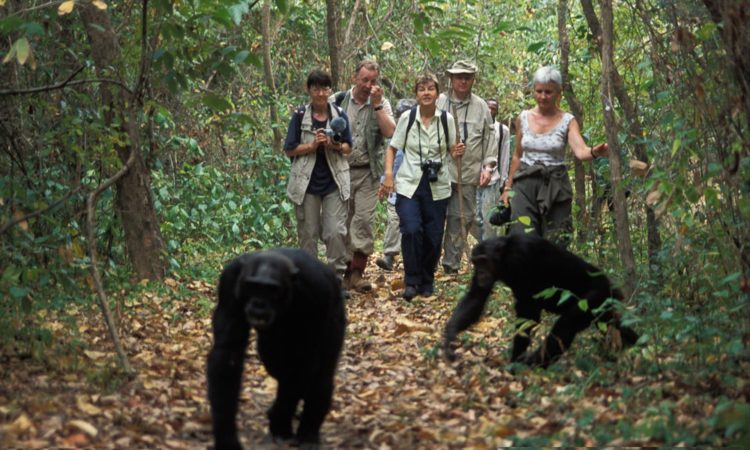
Kibale's flagship experience is chimpanzee trekking, and it is the best in Africa. The Kanyanchu sector of the park holds several habituated chimpanzee communities, and daily morning and afternoon trekking sessions bring groups of six visitors into the forest with expert rangers and trackers who locate the chimps by sound — their long-distance "pant-hoot" calls carrying through the forest canopy for up to two kilometres.
![]()
Finding the chimps in Kibale is typically faster and more reliable than anywhere else in East Africa — success rates regularly exceed 90%. And when contact is made, the experience is extraordinary: chimps are far more active and demonstrative than gorillas, moving rapidly through the understorey, charging along the forest floor, grooming each other with elaborate social attention, and vocalising with an expressiveness that feels immediately and disconcertingly familiar. Youngsters swing from branches overhead; dominant males display with terrifying speed. The hour spent with them passes in what feels like minutes.
Kibale also offers the Chimpanzee Habituation Experience — a full-day programme that accompanies the researchers who are in the process of habituating new chimp communities to human presence. This extended encounter, costing more but offering a full day rather than a single hour, is one of the most immersive wildlife experiences available in Africa.
The Other Primates

Kibale's twelve primate species beyond the chimpanzee make it uniquely rewarding for primate enthusiasts. The red-tailed monkey is ubiquitous in the forest, its white-spotted nose making it instantly identifiable. The red colobus is found in large troops that crash spectacularly through the canopy when disturbed. The black-and-white colobus, Uganda mangabey, olive baboon, l'Hoest's monkey, and pottos (nocturnal and rarely seen) round out a list that has no rival anywhere in Africa.
Guided forest walks specifically focused on primate diversity — rather than just chimpanzees — are available and allow visitors to observe the interactions between species, the complexity of the forest's social ecology, and the full depth of what Kibale offers.
Bigodi Wetland Sanctuary
On Kibale's eastern boundary, the Bigodi Wetland Sanctuary is a community-run conservation project that combines excellent wildlife watching with direct community benefit. A two to three-hour guided walk through the wetland's papyrus swamps and forest patches reliably produces multiple primate species including the red colobus and mangabey, as well as over 200 bird species including many specials. It is one of Uganda's finest community tourism experiences — affordable, rewarding, and directly beneficial to the surrounding villages.
Birdwatching
Kibale's bird list of over 375 species includes 35 Albertine Rift endemics and some of Africa's most sought-after forest birds. The African pitta, green-breasted pitta, African dwarf kingfisher, and numerous sunbird and flycatcher species make Kibale one of Uganda's top birding destinations. Night walks with a ranger reveal a completely different cast of nocturnal species.
The Kibale–Queen Elizabeth Corridor

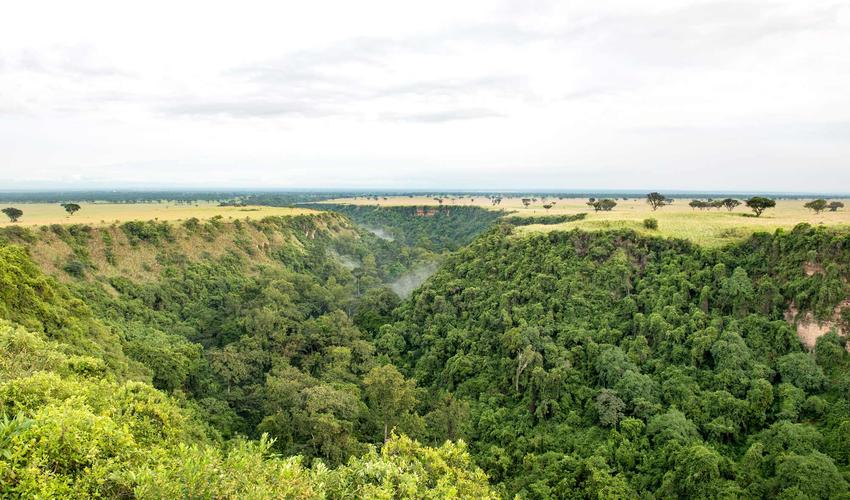
Kibale is most commonly visited as part of a western Uganda circuit that also takes in Queen Elizabeth National Park, 35 kilometres to the south. A wildlife corridor connecting the two parks — the Kyambura Game Reserve and the Chambura Gorge — allows elephants, buffaloes, and other species to move freely between forest and savannah. Many itineraries combine two or three nights at Kibale with the Kazinga Channel cruise and the Ishasha tree-climbing lions at Queen Elizabeth, creating a circuit that offers extraordinary wildlife diversity within a compact and manageable geography.
Getting There & Practicalities
Kibale is approximately five to six hours from Kampala by road, or accessible via scheduled flights to Kasese Airport. The gateway town of Fort Portal is a pleasant base, with accommodation available both in town and in lodges and tented camps within or adjacent to the park. The forest can be visited year-round, though the dry seasons from December to February and June to September make for more comfortable trekking conditions underfoot.
Uganda's western corridor — Bwindi, Mgahinga, Kibale, Queen Elizabeth, and Lake Mburo — linked together with Murchison Falls in the northwest, collectively represents one of the most remarkable concentrations of wildlife, landscape, and natural wonder anywhere on earth. No other country of Uganda's size offers anything close to this diversity, and no other destination rewards the curious, patient traveller quite so completely.