
Uganda's Most Celebrated Wildlife Mosaic
"Queen Elizabeth is not one park but many — savannah, forest, lake, and crater woven together into the richest wildlife tapestry in Uganda."
Introduction
Named in honour of the British monarch who visited in 1954, Queen Elizabeth National Park is Uganda's most visited wildlife destination and one of the most biologically diverse protected areas in Africa. Stretching across 1,978 square kilometres of the western Rift Valley in southwestern Uganda, it encompasses a remarkable variety of habitats — open savannah, tropical lowland forest, wetland, lava plains, crater lakes, and the shores of Lake Edward and Lake George — that together support an extraordinary diversity of species.
The park sits at a biogeographical crossroads where East African savannah species overlap with Central African forest species, creating a wildlife list that few parks anywhere can match: 95 species of mammal and over 600 species of bird have been recorded. It is, in the truest sense, a mosaic — and exploring it properly requires time, curiosity, and a willingness to move between its very different sections.
The Kazinga Channel — Africa's Greatest Waterway Spectacle
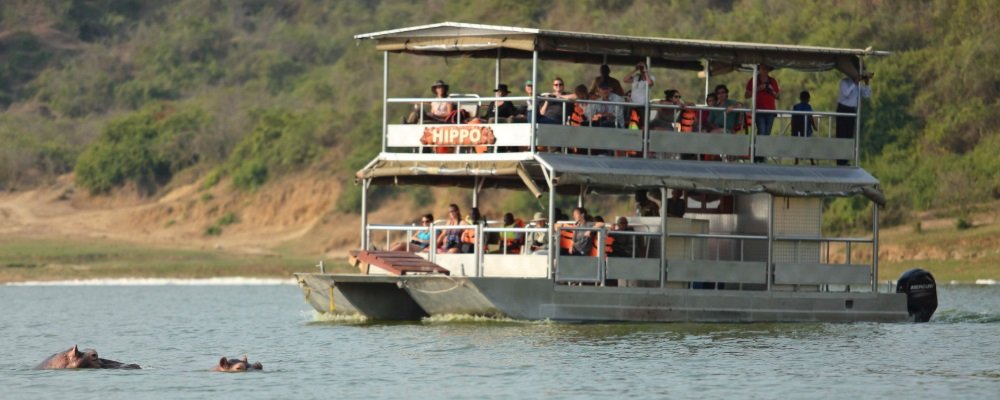
The Kazinga Channel, a 40-kilometre natural waterway connecting Lake George to Lake Edward, is the heart of the Queen Elizabeth experience and the site of what many consider the finest boat safari in Africa. The channel's banks support the highest density of hippos on the continent — thousands of them wallowing in vast, jostling pods that extend along both shores as far as the eye can see. Nile crocodiles of impressive size occupy every sandbar. Elephants and buffaloes come down to drink at the water's edge. African skimmers skim the surface with their remarkable lower mandibles. And the variety of waterbirds — pelicans, herons, spoonbills, kingfishers, and dozens more — is simply overwhelming.
The two-hour boat cruise from Mweya Peninsula, operated daily by the Uganda Wildlife Authority, brings passengers within metres of all of this, at a pace that allows genuine observation and photography. It is, without question, one of the great wildlife experiences in Africa.
The Ishasha Sector — Tree-Climbing Lions
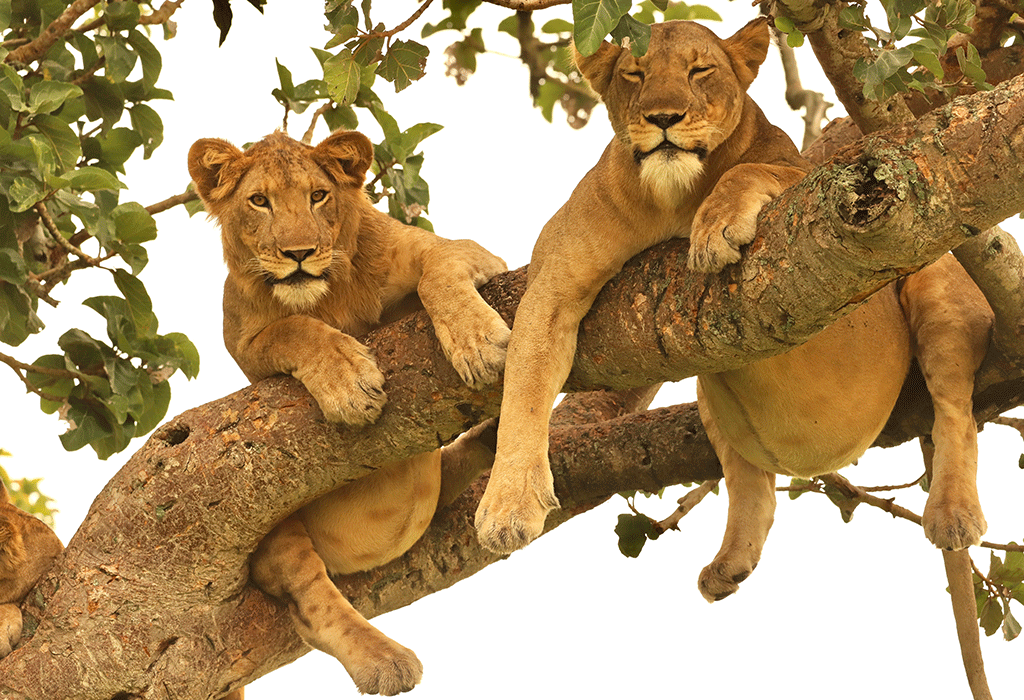
The southern Ishasha sector of Queen Elizabeth is famous throughout the wildlife world for a behavioural quirk found almost nowhere else on earth: its lions climb trees. Specifically, they climb the spreading branches of large fig trees and ancient Phoenix palms along the Ishasha and Ntungwe rivers — lying draped across branches in groups of five, ten, or more, surveying the surrounding savannah with a magnificent indolence.
The reason for this behaviour is debated among researchers — shade from the biting flies that torment the buffalo herds below, and better visibility for spotting prey, are the most widely accepted explanations — but for visitors, the reason matters far less than the sight itself: a pride of lions in a tree is one of the most remarkable and photogenic wildlife spectacles in Africa, and Ishasha is one of only two places on earth (the other being Tanzania's Lake Manyara) where it can be reliably seen.
Kyambura Gorge — The Valley of the Apes
On the eastern edge of Queen Elizabeth, the Kyambura Gorge is a dramatic geological feature — a deep river gorge cut into the flat plains, its walls dropping sharply to a ribbon of riverine forest below — and home to one of Uganda's habituated chimpanzee communities. Guided treks descend into the gorge to find the chimpanzees, and the experience of tracking them through the forest below the savannah rim is as spectacular for the landscape as for the primates themselves.
The gorge is also excellent for birdwatching, with many forest species found here that are absent from the open savannah above.
Maramagambo Forest and Bat Caves
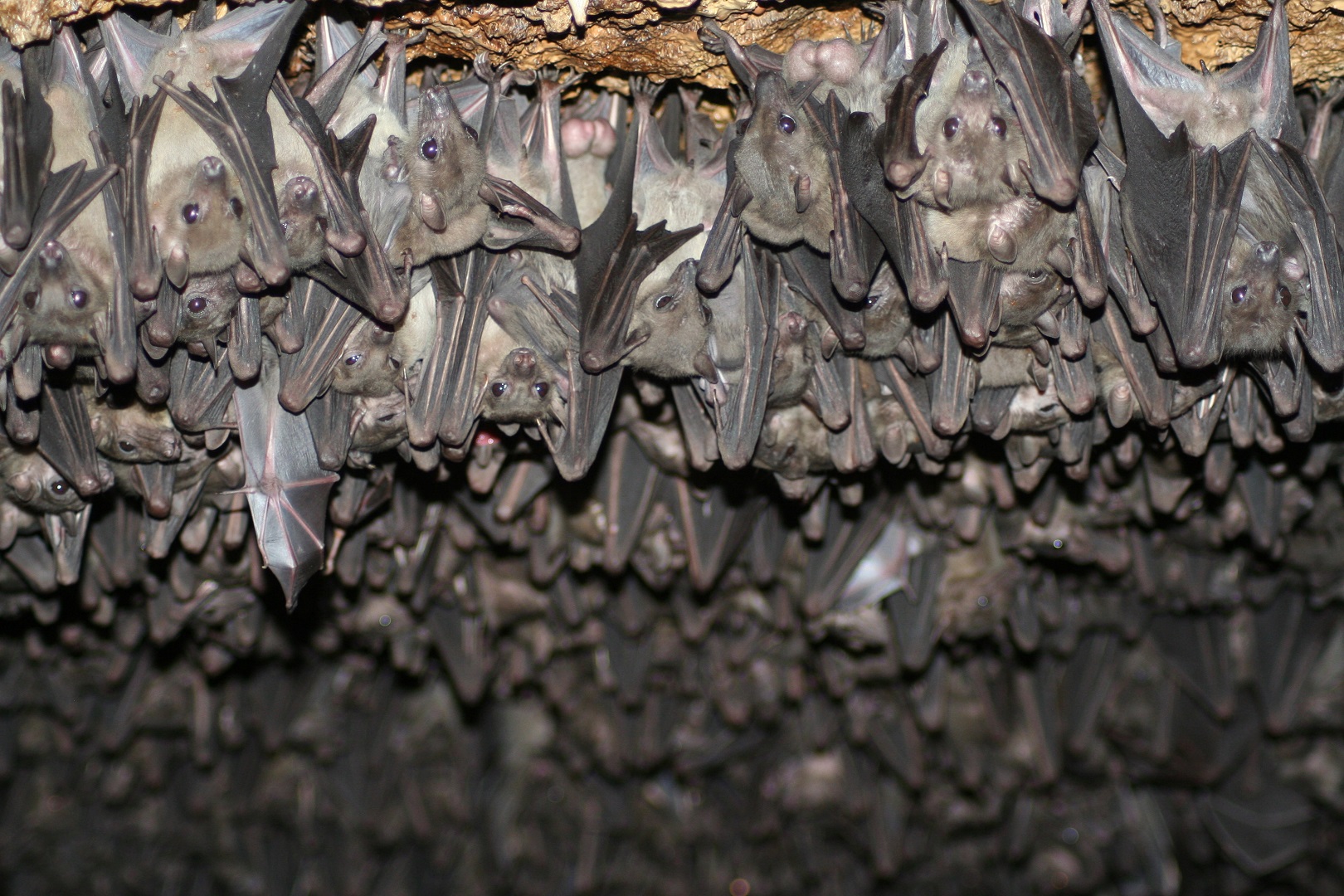
The extensive Maramagambo Forest in the south of the park is the largest forest reserve in Uganda and shelters a remarkable diversity of wildlife including chimpanzees, forest elephants, and a host of Albertine Rift endemics. It is also home to the famous Python Cave — a cavern accessible by guided walk through the forest, whose floor is carpeted with the writhing bodies of rock pythons and whose ceiling hosts hundreds of thousands of Egyptian fruit bats. The bats' droppings support a food chain that includes the pythons, water cobras, and monitor lizards found in the cave's murky pools. It is not for the faint-hearted, but it is unforgettable.
Birdwatching
With over 600 recorded species, Queen Elizabeth is among Africa's premier birdwatching destinations. Highlights include the rare shoebill stork (findable in the papyrus swamps of the Maramagambo Forest and Mweya), the African skimmer on the Kazinga Channel, the pink-backed pelican, the black bee-eater, and many Albertine Rift forest endemics in Maramagambo.
Getting There & Practicalities
Queen Elizabeth is approximately five to six hours from Kampala by road or accessible via scheduled flights to Kasese or charter flights to Mweya and Ishasha airstrips. The Mweya Peninsula, centrally positioned within the park, offers the widest range of accommodation including the classic Mweya Safari Lodge. The Ishasha sector is served by a small collection of tented camps. The dry seasons are the most productive for game viewing, though the park's Rift Valley setting means it receives relatively little rain even in the wet season.