
Power, Wilderness, and the Mighty Nile
"At Murchison Falls, the Nile does not flow — it explodes. And the wilderness that surrounds it is as vast and unhurried as Africa itself."
Introduction
Uganda's largest and oldest national park, Murchison Falls covers an immense 3,840 square kilometres of savannah, riverine forest, and wetland in the northwest of the country. It takes its name from one of the most spectacular natural phenomena in Africa — a point where the entire force of the Victoria Nile, the world's longest river, is compressed through a rocky gorge barely seven metres wide before thundering 43 metres into the plunge pool below. The sound, the spray, and the sheer concentrated power of the falls make Murchison one of the most dramatic landscapes in East Africa — and the vast wildlife-rich plains surrounding it make the park as a whole one of Uganda's finest safari destinations.
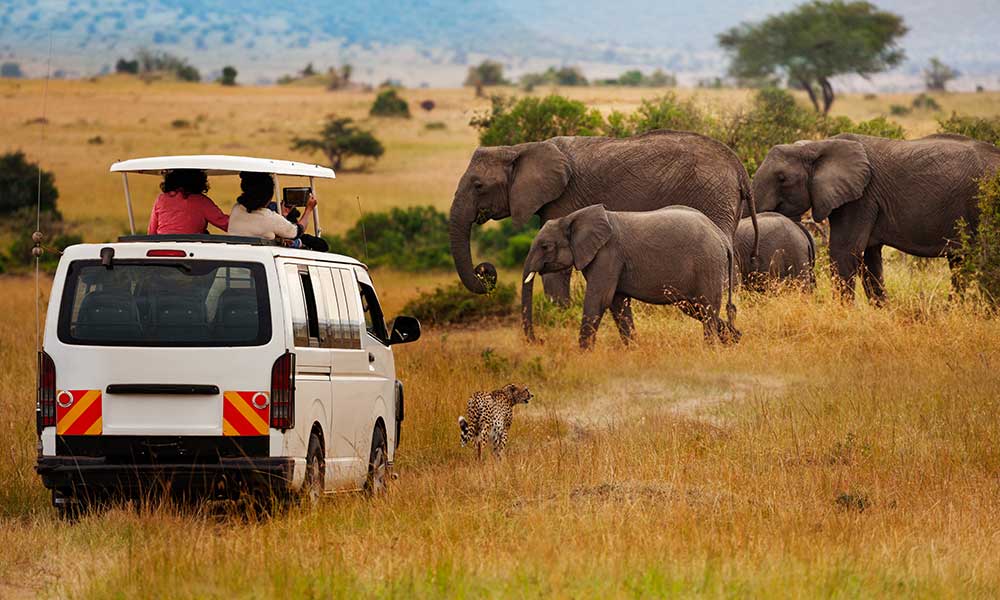
The park is divided by the Victoria Nile into two distinct sections. The north bank is classic open savannah — rolling grassland and acacia woodland with dramatic views toward the Albert Nile delta — while the south bank is denser riverine forest and woodland running down to the Budongo Forest, one of East Africa's most important chimpanzee habitats. Together they create a wildlife experience of remarkable breadth and variety.
The Falls
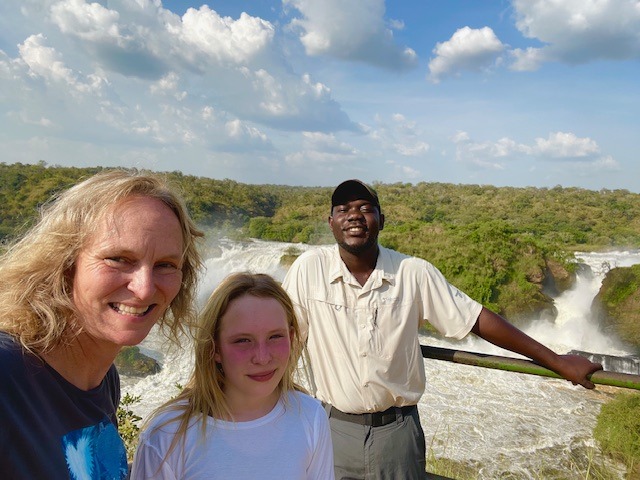
No visit to Murchison begins anywhere other than the falls themselves. Standing at the top of the gorge and looking down as the Nile crashes through the gap with a roar felt as much as heard — the air filled with spray, a permanent rainbow arching over the plunge pool — is an experience of raw, elemental Africa at its most dramatic. A steep trail leads down to the base, where the full force of the cascade is visible from below, and the roosting colonies of swifts that nest in the spray-dampened cliffs add a final surreal detail to the scene.
The Nile Boat Cruise
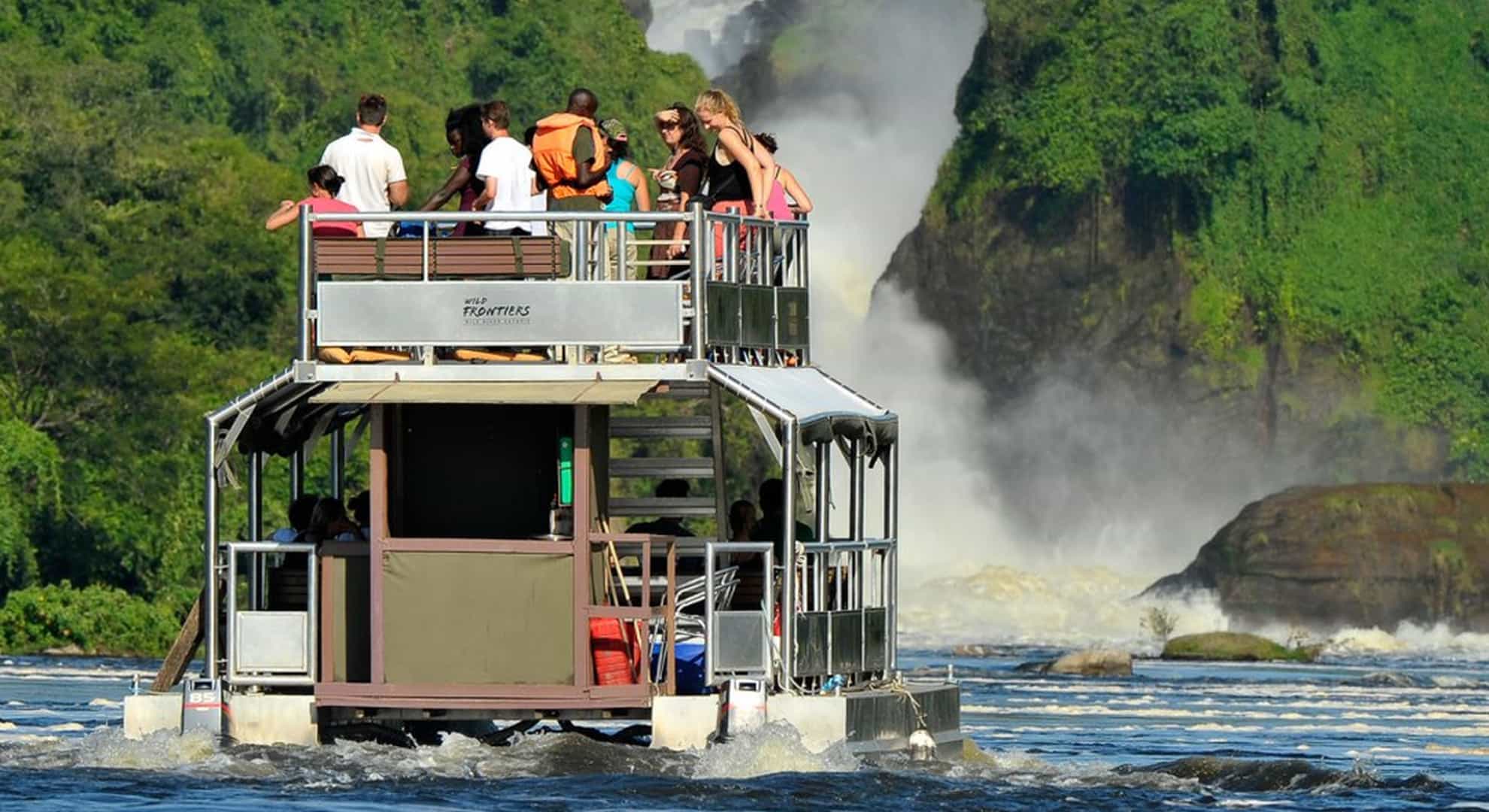
The park's most celebrated activity is the boat cruise from Paraa up the Nile to the base of the falls — a journey of roughly three hours that is consistently rated among the greatest wildlife experiences in Africa. The river banks at Murchison hold the largest concentration of hippos in East Africa, and the boats pass through groups of dozens at a time, the animals surfacing and submerging with the untroubled rhythms of animals that own the water. Nile crocodiles of spectacular size — some exceeding five metres — bask on the sandbanks at close range. Elephants come down to drink at the river's edge. African fish eagles call from the overhanging trees. And as the falls approach, the river narrows and quickens, the spray visible long before the gorge comes into sight.
Game Drives: The North Bank Savannah
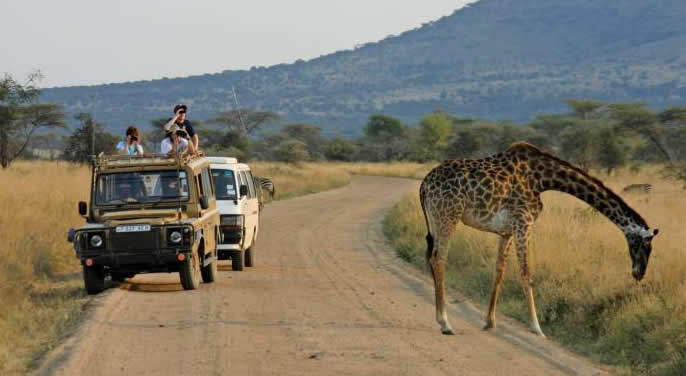
The north bank of the Nile supports the park's densest wildlife populations and its most open game-viewing terrain. Large herds of buffalo graze the grasslands. Elephants — one of Uganda's largest populations — move between the woodland and the river in family groups. Lions are present but require patience to find in the longer grass. The park's giraffes, a distinct Rothschild subspecies among the most endangered in the world, are common and extraordinarily beautiful against the savannah skyline.
Oribi, Uganda kob, hartebeest, and waterbuck are all abundant on the north bank plains, and the birdlife is exceptional — the Murchison Falls ecosystem supports over 450 species.
Chimpanzee Trekking in Budongo Forest
The Budongo Forest Reserve on the park's southern boundary is one of the finest chimpanzee trekking destinations in Uganda — and one of the least visited, largely because most travellers focus on the falls and the north bank safari circuit. The Kaniyo Pabidi and Royal Mile sections of the forest hold habituated chimpanzee communities, and the forest itself is magnificent — a cathedral of giant mahogany and ironwood trees whose canopy creates a cool, dim, mossy world entirely different from the savannah a few kilometres away.
Getting There & Practicalities
Murchison Falls is approximately five to six hours by road from Kampala, or accessible by scheduled and charter flights to Pakuba and Bugungu airstrips. Accommodation ranges from luxury lodges on the river and delta to mid-range camps and budget options. The dry seasons from December to February and June to September are the most rewarding for game viewing, though the park can be visited year-round. The boat cruise to the falls runs daily.