The Land Of A Thousand Hills
Rwanda is a country that defies easy description. One of the smallest nations in Africa — barely the size of Wales or the state of Maryland — it somehow packs in an astonishing density of natural wonders, a capital city that rivals any in the continent for cleanliness and order, and a story of national rebirth that continues to inspire the world. Three decades after unimaginable tragedy, Rwanda has emerged as one of Africa's most forward-looking, best-governed, and most visited destinations. Travellers who arrive expecting merely a gorilla trekking stopover invariably leave transformed by the totality of what the country offers.
Tourism:
Volcanoes National Park — Gorillas in the Mist
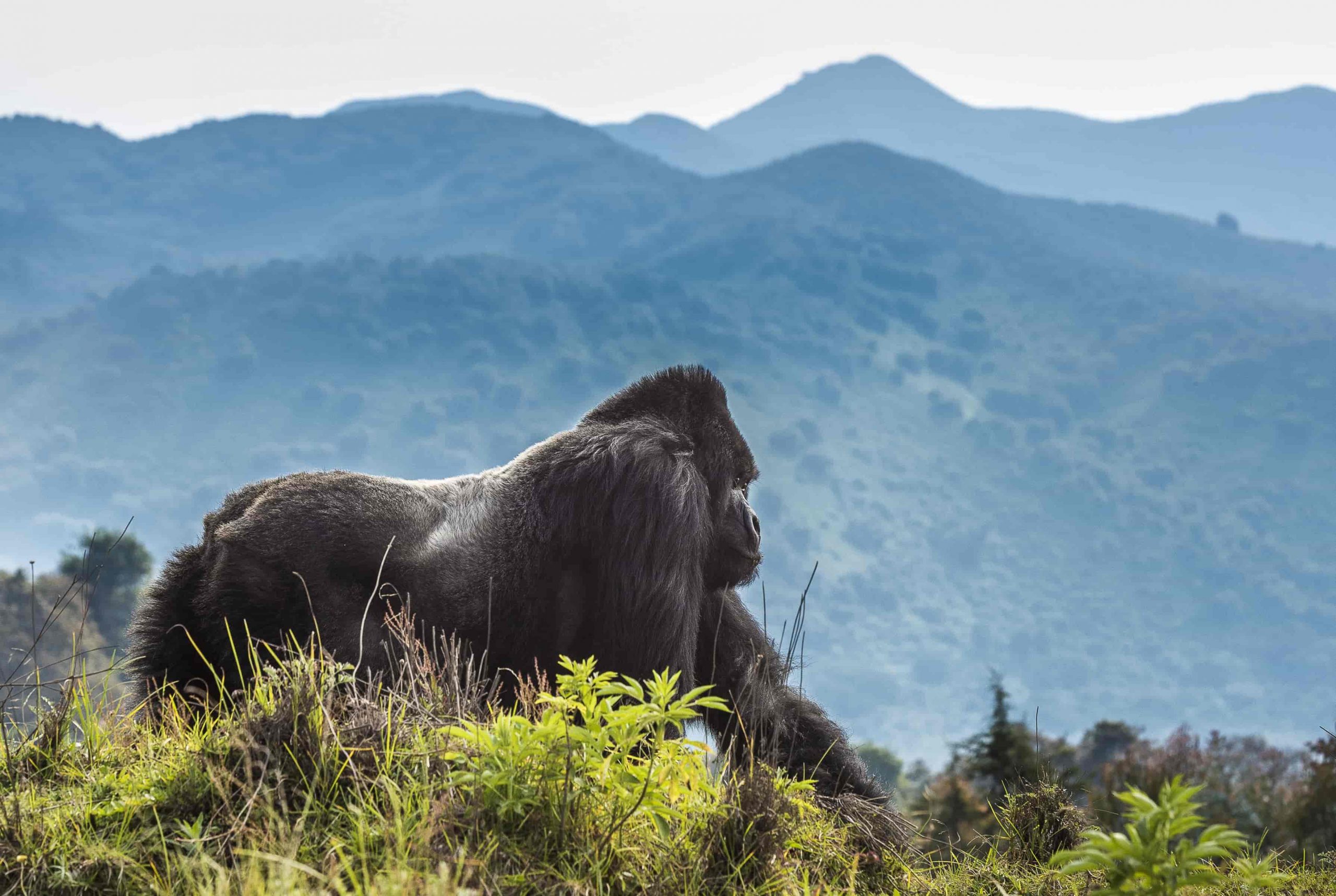
Rwanda's single greatest tourism draw is the mountain gorilla, and nowhere on earth is the gorilla trekking experience more refined than in Volcanoes National Park in the country's northwest. Bordering Uganda and the Democratic Republic of Congo, the park protects a section of the Virunga Massif — a chain of ancient, forest-cloaked volcanoes whose slopes are among the most biodiverse habitats on the planet.
The park is home to ten habituated gorilla families, and trekking permits — priced at USD 1,500 per person, among the highest wildlife permit fees in the world — are deliberately limited to protect the animals and ensure that each visitor's experience remains intimate and unhurried. The hour spent with a gorilla family in the misty bamboo and Hagenia forests is by universal consensus one of the most profound wildlife encounters available anywhere.
It was in these same forests that the primatologist Dian Fossey lived and worked for nearly two decades, transforming scientific understanding of mountain gorillas and laying the foundations for their conservation. Her story is told at the Ellen DeGeneres Campus of the Dian Fossey Gorilla Fund near Kinigi, a world-class facility that is itself becoming a major visitor attraction. Fossey's grave lies on the site of her former research camp at Karisoke, inside the park, and a hike to visit it carries a powerful emotional weight.
Beyond gorillas, Volcanoes National Park also offers golden monkey trekking — another rare and delightful primate encounter unique to the Virungas — as well as hikes to the summits of the volcanic peaks, including the twin craters of Mount Bisoke.
Nyungwe Forest National Park — Ancient Rainforest
In Rwanda's far southwest, Nyungwe Forest is one of the oldest and most intact montane rainforests in Africa, covering over 1,000 square kilometres of ridge-top jungle draped in moss, orchids, and ferns. It is a place of extraordinary ecological richness, home to thirteen primate species including habituated chimpanzees and the acrobatic Angola colobus monkey, which travels in troops of up to 400 individuals — the largest arboreal primate group in Africa.
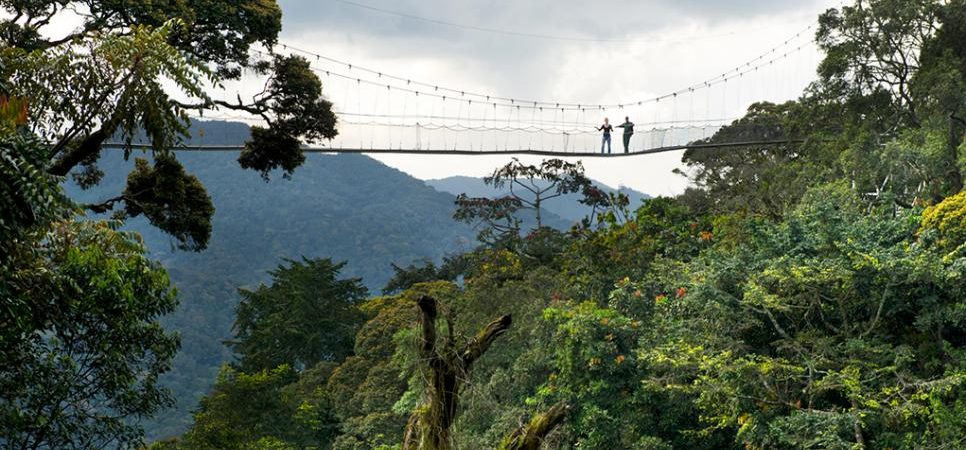
The park's signature experience is its canopy walkway, a suspension bridge strung 70 metres above the forest floor that offers a vertiginous, unforgettable view over the treetops and the rolling hills below. For birdwatchers, Nyungwe is exceptional — over 300 species have been recorded, including 29 found nowhere else in the Albertine Rift.
Lake Kivu — Africa's Most Beautiful Lake
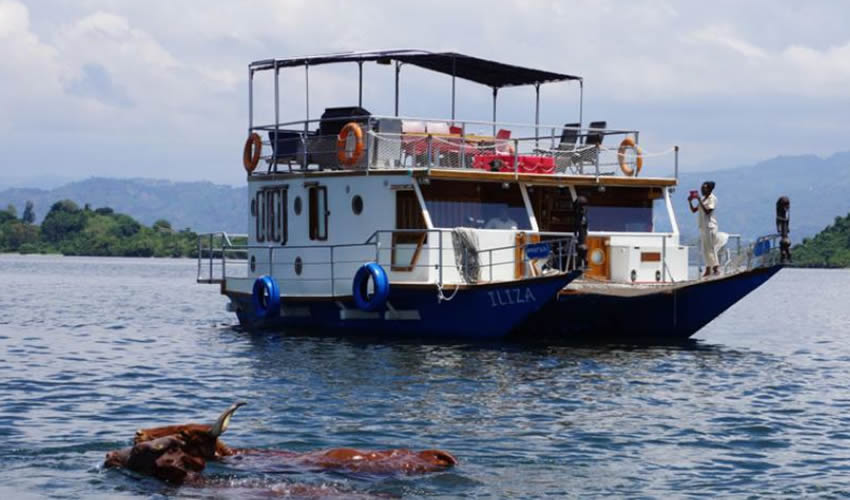
Rwanda's western border is defined by Lake Kivu, a vast, island-studded freshwater lake whose shoreline is lined with lush hills that tumble steeply to the water's edge. The towns of Rubavu (Gisenyi) in the north and Rusizi (Cyangugu) in the south are the main access points, but it is the lakeside town of Kibuye — now called Karongi — that captures most hearts: a quiet, unhurried place of waterfront restaurants, boat trips to forested islands, and sunsets over the water that rank among Africa's finest.
Lake Kivu is safe for swimming, kayaking, and sailing — a rarity among large African lakes — and the surrounding hills offer excellent cycling and hiking. A number of luxury lodge properties have made the Kivu shoreline one of Rwanda's most rewarding leisure destinations.
Akagera National Park — The Classic Safari
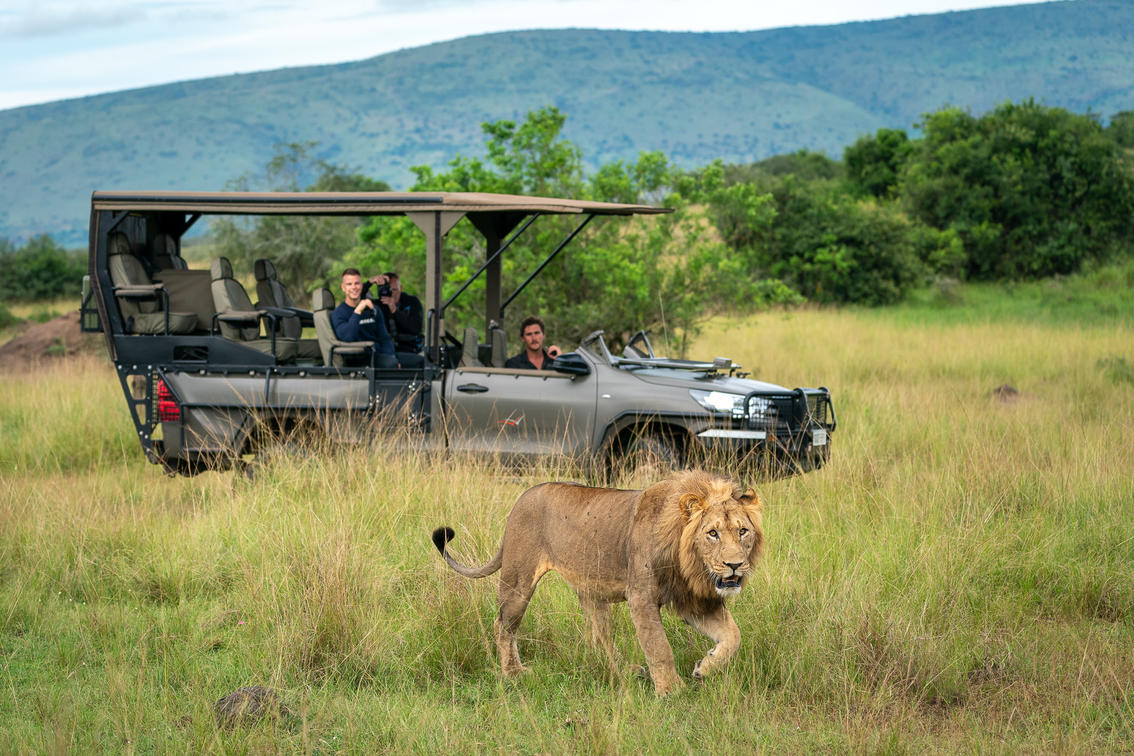
In Rwanda's northeast, bordering Tanzania, Akagera National Park is one of Africa's great conservation comeback stories. Ravaged during the 1990s, the park has been painstakingly restored over the past two decades with the help of African Parks, a conservation organisation that now manages it in partnership with the Rwandan government. Lions were reintroduced in 2015, black rhinos in 2017, and the park now supports the full range of savannah megafauna — elephant, hippo, leopard, buffalo, zebra, giraffe, and both lion and rhino — in a landscape of open grassland, lakes, and papyrus swamps that stretches scenically to the horizon.
Akagera is Rwanda's only savannah park, and its accessibility from Kigali — just two hours by road — makes it an ideal addition to any Rwanda itinerary.
Kigali — Africa's Cleanest City
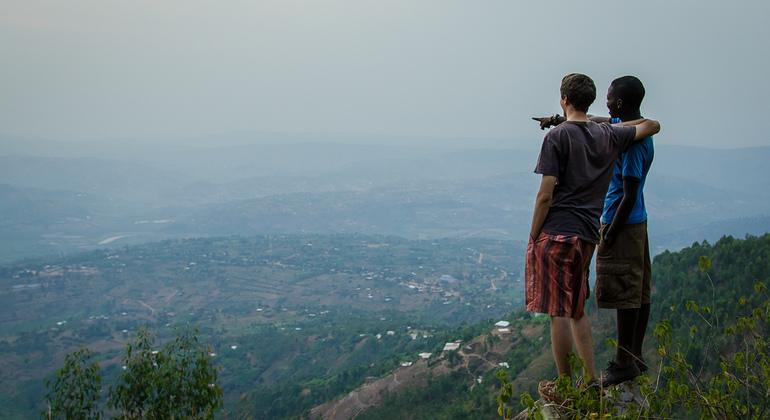
No article on Rwandan tourism is complete without discussing Kigali, one of the most remarkable cities on the African continent. The capital is strikingly clean — a ban on plastic bags introduced in 2008 transformed the city's streetscapes — and navigated with ease, its hillside neighbourhoods connected by well-maintained roads and a growing fleet of motorbike taxis.
The Kigali Genocide Memorial is an essential visit, a profoundly moving and thoughtfully curated site that honours the 800,000 people killed in the 1994 genocide and bears unflinching witness to one of history's darkest chapters. It is not an easy experience, but it is an important one.
Beyond the memorial, Kigali offers a sophisticated café and restaurant culture, excellent craft and design markets, the outstanding Inema Arts Center — a gallery and creative hub founded by two Rwandan brothers — and a nightlife scene centred on the Kimihurura and Kiyovu neighbourhoods that surprises many first-time visitors with its energy and quality.
Practical Information
Rwanda is a year-round destination with two dry seasons: June to September and December to February. Kigali's Kanombe International Airport receives direct flights from several African hubs, as well as direct connections to London, Brussels, and other long-haul destinations via RwandAir. The country uses the Rwandan Franc, English, French, and Kinyarwanda are all official languages, and the standard of English among tourism professionals is generally high. Rwanda is consistently rated among the safest countries in Africa for travellers.